Civil Society
One Nation Under Gods
American Grace: How Religion Divides and Unites Us by Robert D. Putnam & David E. Campbell
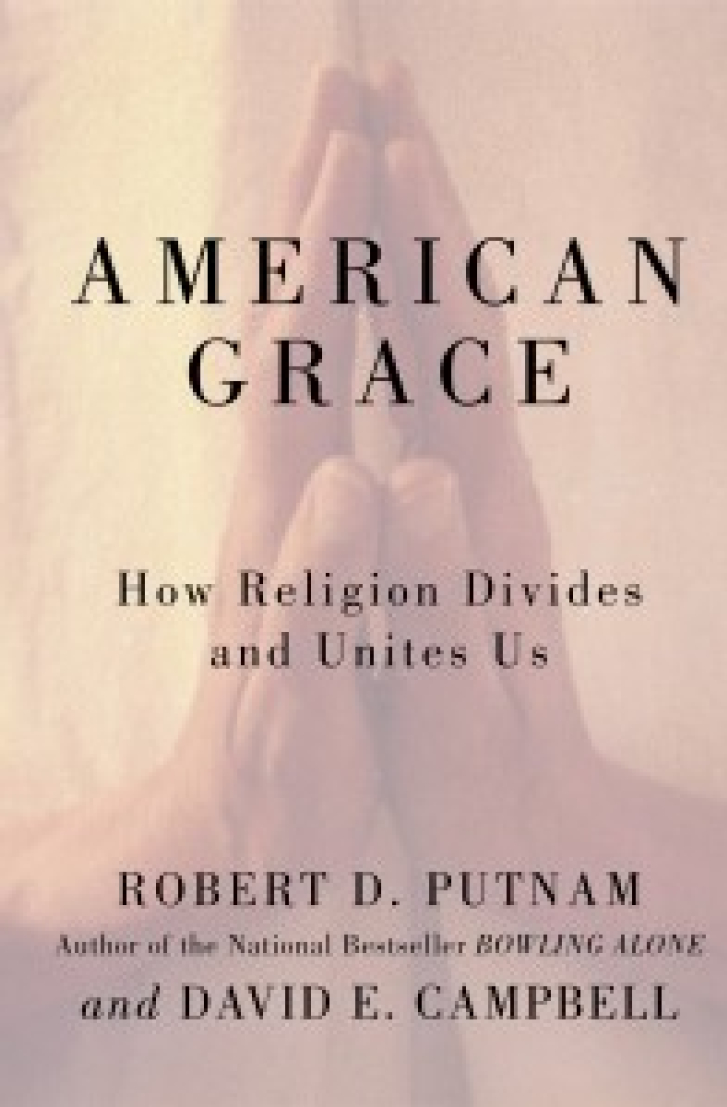
American Grace: How Religion Divides and Unites Us by Robert D. Putnam & David E. Campbell
The hundreds, if not thousands, of nonprofits and collaborations that are similar to CAPs should definitely take notice.
Investing in leadership development represents a prerequisite to a new US foreign policy that is more in accord with today’s unstable and volatile times.
Annually, more than a trillion dollars are spent on millions of American nonprofit and government institutions. And 15 nonprofits are started each day. But there is still not significant progress on social issues in the United States. In this audio lecture, sponsored by the Stanford Social Innovation Review, Andrew Wolk, CEO of Root Cause, argues that the time has come for a social impact market—one that fosters innovation and collaboration across the governmental, business, and nonprofit sectors to maximize scarce resources and spread solutions. Wolk believes this cross-sector approach presents our best chance to solve long-term educational, healthcare, environmental, and other problems.
Archaic ideas and the fundamental restructuring taking place in our economy, makes business as usual unacceptable.

Without a healthy civil society it becomes difficult if not impossible to solve other, more readily apparent problems.
Three films, Waiting for “Superman”, The Lottery, and Teached, all of which provide a candid and critical look at U.S. public education, hit the big screen this year. Positioned to generate conversation and action about education reform, these documentaries take you into the lives of children and families who are struggling in a system that is failing them. 2010 Sundance Audience Award winner Waiting for “Superman” has garnered attention through its support from Bill Gates, Oprah Winfrey and Mark Zuckerberg, among others. This panel of filmmakers speaks on their experiences telling these powerful stories and offers ways for the audience to be part of the solution in their own communities and via media platforms. They spoke at the 2010 NewSchools Summit, an event convened by the NewSchools Venture Fund.
U.S. Secretary of Education Arne Duncan and Chairman of the House Committee on Education George Miller, address the NewSchools Summit 2010.
What would it take to implement “next-generation” poverty measures in the United States?